
DYCP - Listening to Materials: Developing Storytelling with Weaving, Sensors, and Puppetry

This research was supported by Arts Council England through a Developing Your Creative Practice (DYCP) grant. The project explored how Saori weaving can be used to create textile structures whose movement, behaviour, and character emerge through material composition and environmental interaction. It established key approaches to improvisational weaving, the integration of responsive elements, and material-led puppetry that continue to inform future iterations of my practice.
MATERIAL-LED PRACTICE
The DYCP research is a part of a broader material-led practice exploring how sound, movement, and behaviour emerge from interactions between fibres, sensors, and environmental conditions.
Selected video documentation, including field recordings and early sonic experiments, can be viewed in Listening to materials.
PRACTICE
- improvisational weaving using Saori looms
- integration of conductive, resistive and chromic materials
- early responsive systems and activation tests
- outdoor testing where wind and humidity influence behaviour
COLLABORATION
This phase included collaborations with a puppeteer and an e-textile designer.
These sessions helped develop approaches to locating points of articulation within woven structures and exploring how responsive systems, including shape memory alloys, can be embedded without restricting flexibility.
FINDINGS
- The Saori loom supports an improvisational process where material composition, structure, and behaviour emerge simultaneously during weaving.
- Variations in material composition and relative weight distribution directly shape movement, producing distinct behavioural qualities and character.
- Observing multiple woven samples outdoors revealed how their movements can interact, suggesting potential for staging relationships between textile forms within a puppetry dramaturgy.
- Collaboration with a puppeteer helped identify how points of articulation can be located within the weave, informing how these textile structures can be manipulated and performed.
- Discussions with an e-textile designer introduced approaches to embedding responsive systems, including shape memory alloys, within flexible woven structures without restricting their movement.
MATERIAL EXPLORATION
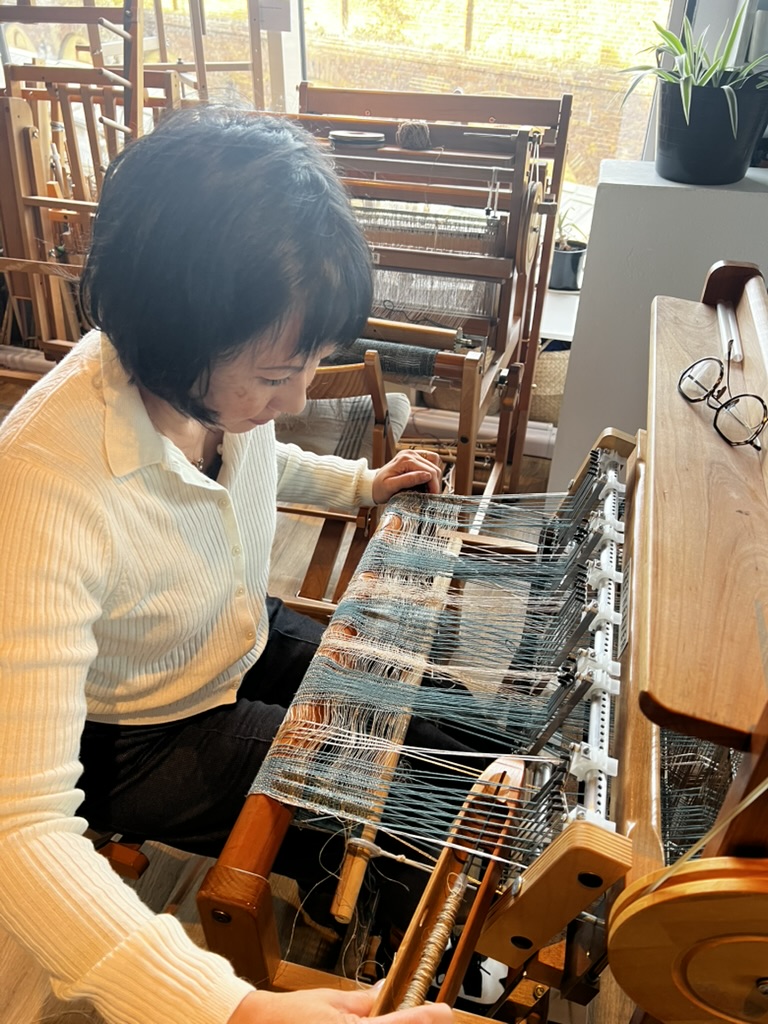
Learning Saori weaving techniques, including warp preparation, tension control, and material improvisation.
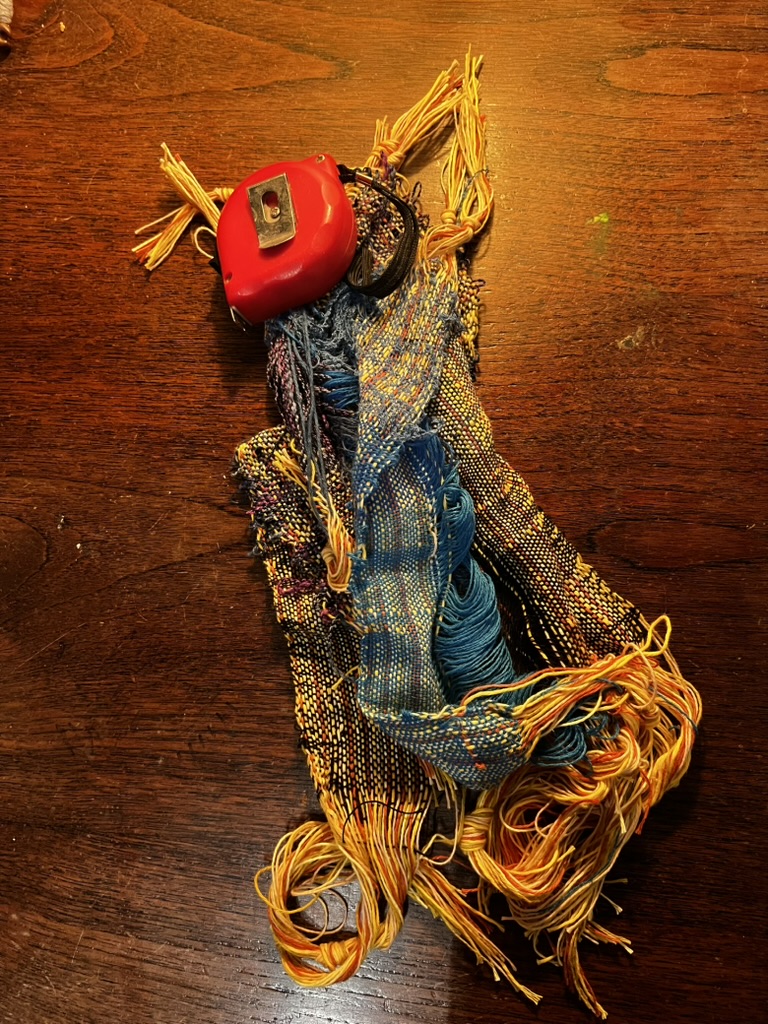
Improvising puppet-like forms through material composition and structural variation on the Saori loom.
EMBEDDING RESPONSIVE SYSTEMS
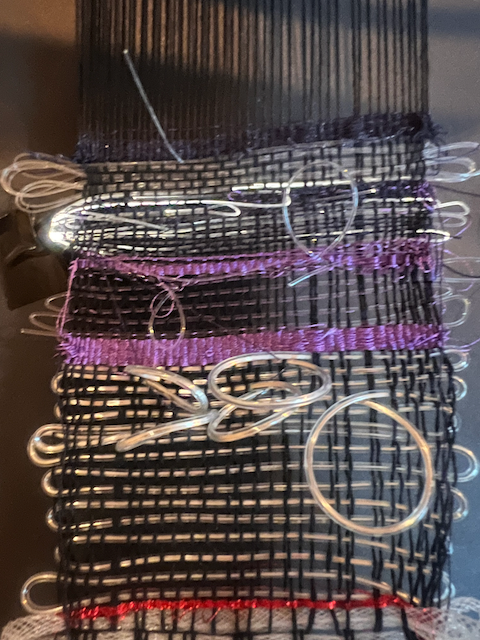
Fibre optics integrated within the weave to explore light transmission and responsive behaviour.
PERFORMANCE & ENVIRONMENT
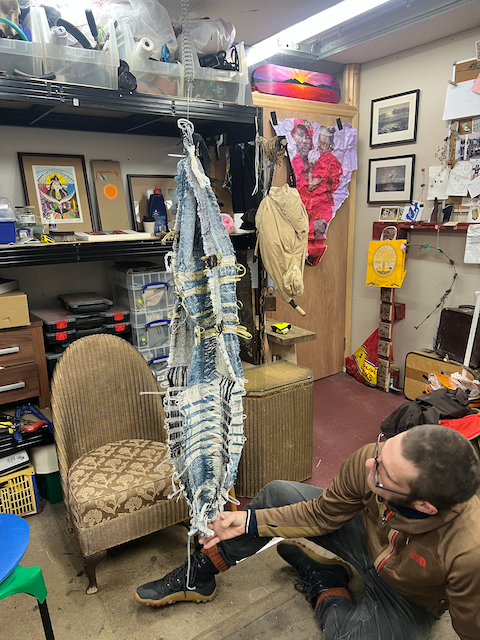
Studio session with puppeteer testing how material composition and weight distribution influence movement and the emergence of articulated “joints” within Saori woven structures.
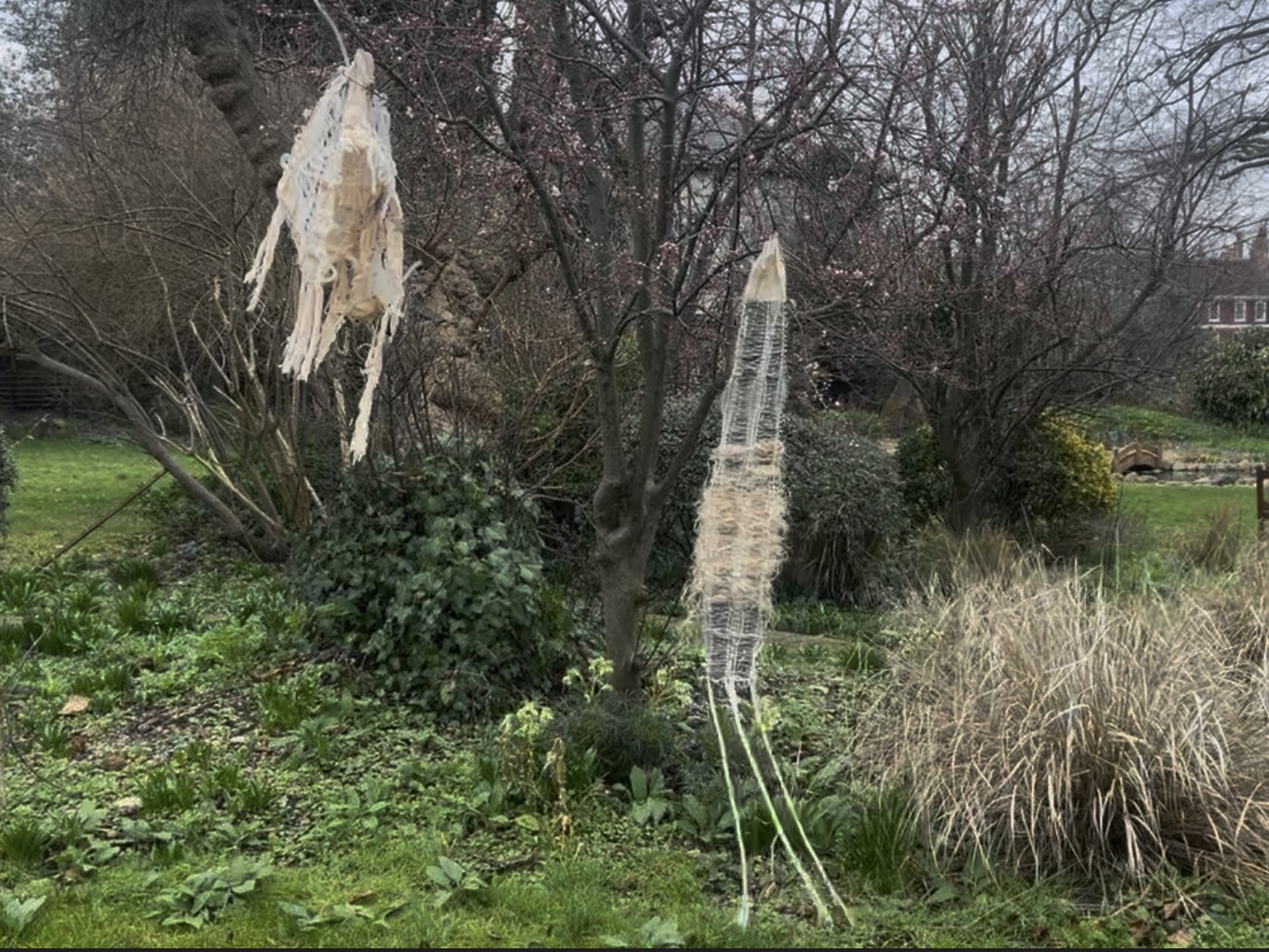
Two Saori textiles suspended outdoors, allowing wind and environmental conditions to shape movement.
WHAT IS NEXT?
Outdoor testing during winter limited the activation of thermochromic systems due to low temperatures, revealing a mismatch between material activation thresholds and environmental conditions. This shifted the research toward exploring alternative activation methods, including acoustic and humidity-based systems.
This phase clarified a direction for future work: exploring how responsive Saori systems can operate within environmental variability, while maintaining the flexibility of the weave and integrating these behaviours into puppetry dramaturgy.